
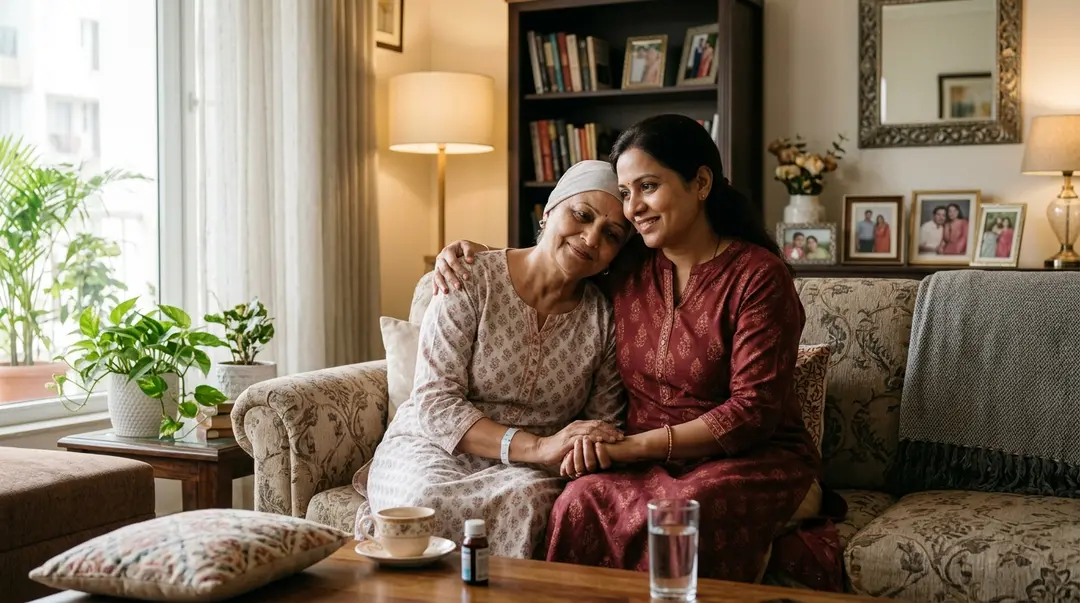
Cancer care basics, in plain words.
A short guide to cancer reports, treatment side-effects and everyday care during treatment. General education only, and always alongside your oncologist.
A cancer report, in plain words.
The words you will see most often on reports, and what they mean.
Biopsy report
A small piece of tissue is checked under a microscope. It confirms whether cancer is present and which type it is.
Stage
How large the cancer is and whether it has spread. It is written as a number (0 to IV) or with the letters T, N and M.
Grade
How different the cancer cells look from normal cells. A higher grade usually means faster-growing cells.
Blood counts (CBC)
Haemoglobin, white cells and platelets. They are checked before each cycle, because treatment can lower them.
Tumour markers
Some cancers release substances that show up in the blood. Doctors follow the trend over time; one value alone is not a diagnosis.
Scans
CT, MRI, PET-CT and ultrasound show where the cancer is and how it responds to treatment.
One value is not a diagnosis. Your oncologist reads the whole report.
How cancer is staged.
Most solid cancers are staged with the TNM system: T for the main tumour, N for nearby lymph nodes and M for spread to distant parts of the body.
Abnormal cells in place
The abnormal cells have not spread into nearby tissue.
Cancer in one area
Higher numbers mean a larger tumour or spread into nearby tissue or lymph nodes.
Spread to distant parts
The cancer has spread to other organs or distant parts of the body.
What a stage means for you is explained by your oncologist. Source: U.S. National Cancer Institute, “Cancer Staging”.
Common side-effects of treatment.
Chemotherapy, radiation and surgery affect people differently. Tell your oncology team about any side-effect; many can be eased.
Tiredness
Fatigue that does not go away with rest is the most common side-effect.
Nausea and vomiting
Medicines given by your oncology team can prevent or reduce it.
Mouth sores
A sore mouth or a change in taste can make eating difficult.
Low blood counts
Fewer white cells raise the risk of infection; fewer platelets can cause bleeding or bruising.
Appetite and weight
Appetite often drops during treatment, and weight can fall.
Hair and skin
Some treatments cause hair loss or skin changes, which usually improve after treatment.
A fever during chemotherapy can be serious. If your temperature is 38 °C (100.4 °F) or higher, call your oncology team or go to the nearest hospital straight away.
Source: U.S. National Cancer Institute, “Side Effects of Cancer Treatment”.
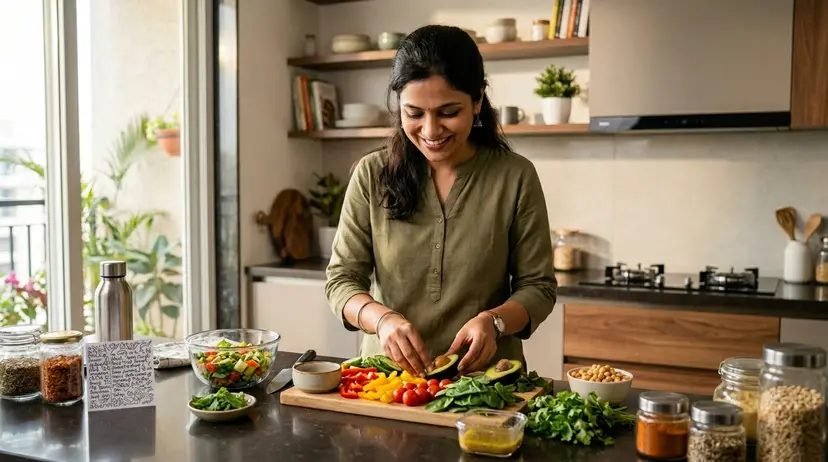
Eating during treatment.
Good nutrition helps the body cope with treatment. Simple steps that many patients find useful:
- Small meals every two to three hours, instead of three large ones
- Some protein at every meal: dal, curd, paneer, eggs or sprouts
- Plenty of fluids through the day
- Freshly cooked food, and fruit washed well, especially when blood counts are low
Your oncology team or dietitian decides what suits you.
Herbs and supplements during treatment.
Tell your oncologist about everything you take, including Ayurvedic medicines, herbs, home remedies and supplements. Some can interact with chemotherapy or change blood test results.
Risky
- Herbs or powders started on someone’s advice, without telling your oncologist
- Stopping or delaying treatment to try something else
- Products with no label or unknown ingredients
Safer
- A complete list of everything you take, shared with your oncologist
- Any Ayurvedic care chosen and timed by a doctor around your treatment
- Your oncology treatment continuing exactly as prescribed
Questions to ask your oncologist.
- 1
What type and stage is my cancer?
And what does that mean for my treatment?
- 2
What is the aim of my treatment?
Which treatments are planned, and in what order?
- 3
Which side-effects should I expect?
And when should I call the team or go to hospital?
- 4
Which tests will I need, and how often?
Blood counts, scans or tumour markers.
- 5
What should I eat, and is anything off limits?
Including herbs, supplements and other medicines.
A report you don’t understand? Talk to our cancer care team.
Message us on WhatsApp or call the clinic. We’ll explain the next step and book your consultation.
Book your consultation.
Answer four quick questions. Our cancer care team calls you back and books your consultation.
- Your reports read with you
- Alongside your oncologist, never instead
- In clinic or online across India